


ABOUT INDIA
"If there exist one place on earth where all dreams of humanity have found a home from the early days when man began his existence, that is India,"
- Romain Rolland
India is a vast South Asian country with diverse culture, people and rich spiritual knowledge.
In India you can find the best temple, ashram or sacred place where many people experienced and are still experiencing liberation.
These places have been blessed by many masters across history and prehistory through years of meditation, prayer and dedication to discipline their mind, body and spirit.
Some of these places are known to still have active "miracles" happen as people experience out of body experiences and may still see manifestations of the higher level of consciousness occur.
In very special locations it is reported by the ancient Indians in their myths and religious scrolls that the Hindu gods have fought wars visible with the naked eye.
So in a sense India is truly a place of intense "supernatural" and spiritual energy.

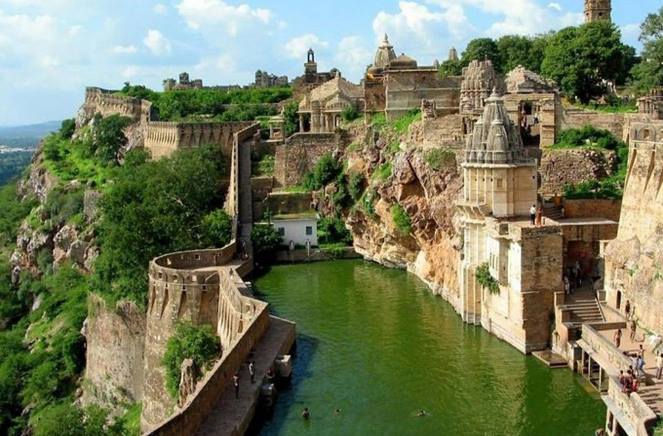


A BIT OF HISTORY AND GEOGRAPHY
Geography: India is the country that occupies most of the Indian subcontinent in southern Asia.
History: India's earliest settlements have developed in the culture hearths of the Indus Valley around 2600 B.C.E.

GEOGRAPHY
India lies on the Indian Tectonic Plate, the northern portion of the Indo-Australian Plate, whose continental crust forms the Indian subcontinent.
It is the seventh largest country in the world, with a total area of 3,287,263 square kilometers.
On the south, India projects into and is bounded by the Indian Ocean –- in particular, by the Arabian Sea on the west, the Lakshadweep Sea to the southwest, the Bay of Bengal on the east, and the Indian Ocean proper to the South.
The northern frontiers of India are defined largely by the Himalayan mountain range, where the country borders China, Bhutan, and Nepal.
The Ganga is the longest river originating in India. The Ganga–Brahmaputra system occupies most of northern, central, and eastern India, while the Deccan Plateau occupies most of southern India.

HISTORY
The history of India includes the prehistoric settlements and societies in the Indian subcontinent.
It contains the advancement of civilisation from the Indus Valley Civilisation to the eventual blending of the Indo-Aryan culture to form the Vedic Civilisation.
Indian religion also changed as Hinduism, Jainism and Buddhism started growing and expanding over its territories.
India went through the onset of a succession of powerful dynasties and empires for more than three millennia throughout various geographic areas of the subcontinent, including the growth of Muslim dominions during the Medieval period intertwined with Hindu powers.
The advent of European traders and privateers, resulted in the establishment of British India, and the subsequent independence movement that led to the Partition of India and the creation of the Republic of India.

INDIAN SPIRITUALITY
"Brahma, the self-existing, desiring to produce
various creatures from his own body, first, with
a thought, created the waters, and deposited in
them a seed. This seed became a golden egg,
resplendent as the sun, in which he himself
was born as- Brahma, the progenitor of all
worlds."
Sanskrit Texts
In most of their culture, Indians, share the creative principles and human values found in every spiritual tradition or religion.
However, the particular details vary and its diversity is immense
The view of the universe in the Indian culture is that of a constant battle between the forces of life, death, destruction and creation. They remove the immortality of the gods by stating that even gods are threatened by death thus creating concern and wars between them.
In most of their spirituality they share the idea that nothing is forever and everything is changeable.
They see that not even evil stays evil for ever and good can turn to bad as well.
Life conquers death and order always comes after chaos.
They call this the circle of Samsara.
Here the soul is trapped in an eternal desire for different momentary satisfaction but is cursed to never find the eternal peace it is actually seeking, via the Samsaric pleasures.
One must find the eternal peace by abandoning this circle.
But that's only part of the Hindu religion.
They have a few more views but they are similar in many ways.

INDIAN CUISINE
Indian cuisine is as diverse as it is colorful. It consists of a plenitude of dishes of all kinds. Most of these dishes are influenced by religion, culture, tradition and region.
Given the range of diversity in soil type, climate, culture, ethnic groups, and occupations, these cuisines vary substantially from each other and use locally available spices, herbs, vegetables, and fruits.
Historical incidents such as foreign invasions, trade relations, and colonialism have played a role in introducing certain foods to the country. For instance, potato, was brought to India by the Portuguese, who also introduced chilies and breadfruit.
Indian cuisine has shaped the history of international relations; the spice trade between India and Europe was the primary catalyst for Europe's Age of Discovery.

ART AND CULTURE
Culture plays an important role in the development of any nation.
It represents a set of shared attitudes, values, goals and practices.
Culture and creativity manifest themselves in almost all economic, social and other activities.
A country as diverse as India is symbolized by the plurality of its culture.
India has one of the world’s largest collections of songs, music, dance, theater, folk traditions, performing arts, rites and rituals, paintings and writings that are known, as the ‘Intangible Cultural Heritage’ of humanity.
The origin of Indian art can be traced to pre-historic Hominid settlements in the 3rd millennium BC.
On its way to modern times, Indian art has had cultural influences, as well as religious influences such as Hinduism, Buddhism, Jainism and Islam. In spite of this complex mixture of religious traditions, generally, the prevailing artistic style at any time and place has been shared by the major religious groups.